 0
0
 0
0
Swapping tired old cabinet knobs for something fresh is one of the quickest ways to give a kitchen or bathroom a new lease of life. But before you rush off to buy a boxful of shiny new pulls, there’s one small step that saves an awful lot of bother later: getting your cabinet knob size right. Buy the wrong dimensions and you’re left with mismatched holes, wobbly fittings, or knobs that look completely out of proportion to your cupboard doors.
This guide walks you through exactly how to take accurate cabinet knob measurements, what the standard cabinet knob size actually looks like, and how to avoid the common mistakes people make when ordering cabinet hardware replacement online.
Why Getting Cabinet Knob Size Right Matters
A knob that’s too small can look lost on a large drawer front, while an oversized knob might catch on clothing or feel clumsy in the hand. Beyond aesthetics, the practical fit matters too — the screw needs to match the existing hole, and the knob needs enough clearance to sit comfortably without knocking against the frame when the door or drawer opens. Getting the measurements sorted before you buy means no wasted trips back to the shop and no unnecessary drilling.
Tools You’ll Need
Before you start measuring, gather a few simple tools:
- A tape measure or ruler (a digital calliper is even better for precision)
- A pencil and paper to jot down numbers
- The old knob, if you still have it, for comparison
Also Read: Cup Handles Vs Knobs: Which is Better for Your Drawers?
Step-by-Step: How to Measure Your Cabinet Knobs
1. Measure the Diameter or Width
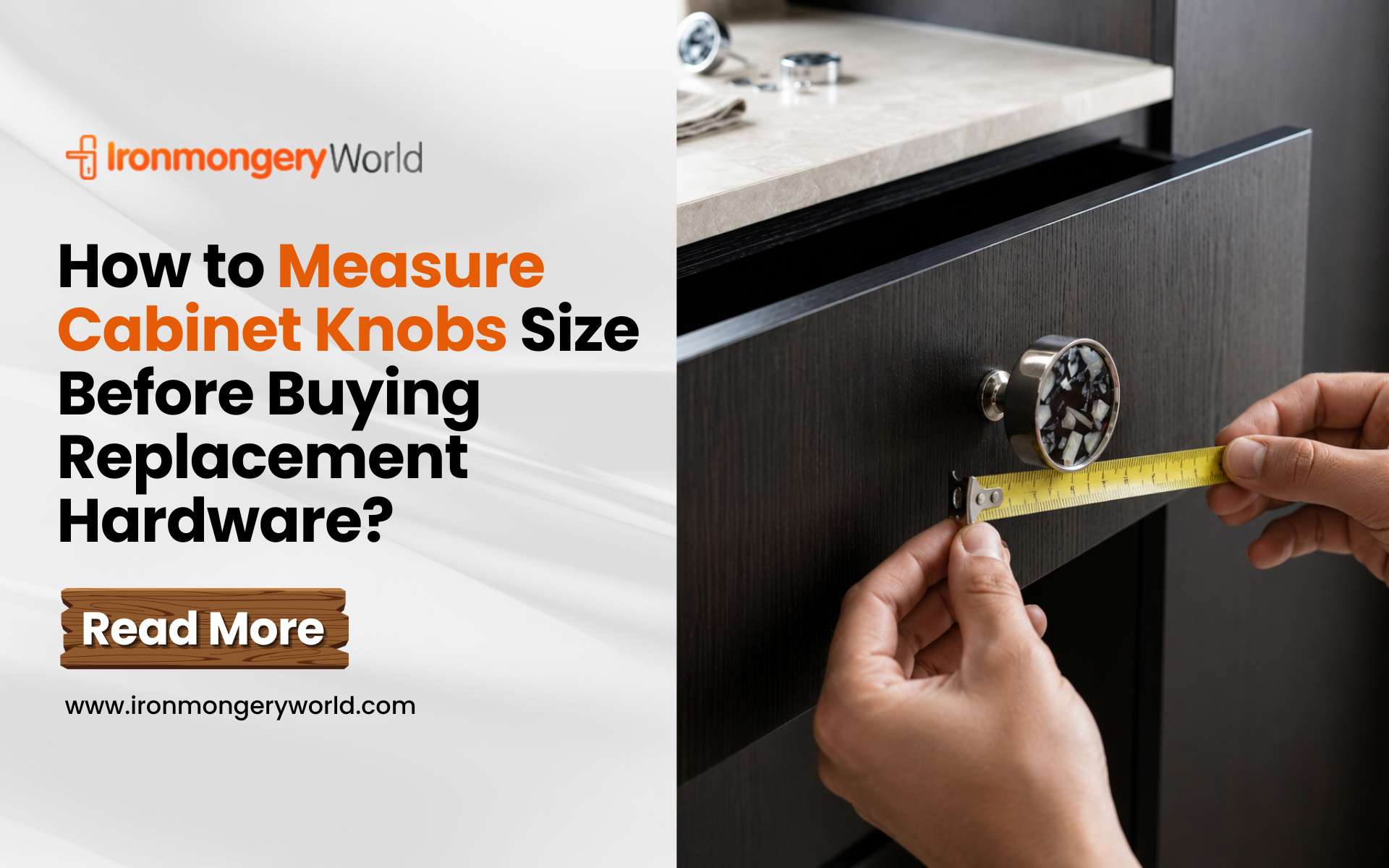
For round knobs, measure straight across the widest point, from one outer edge to the other. This is the figure most retailers list as the cabinet knob size on their product pages. For square, oval, or novelty-shaped knobs, measure the widest and tallest points separately, as both dimensions will affect how it sits against your cabinet surface.
2. Check the Cabinet Knob Projection
Cabinet knob projection refers to how far the knob sticks out from the door or drawer face once fitted. This is measured from the surface of the cabinet to the furthest point of the knob. Projection matters more than people expect — a knob with too much projection can catch on nearby handles or snag on sleeves, particularly in narrow galley kitchens where cupboards sit close together.
3. Measure the Base Diameter
If your knob has a wider base that sits flush against the door, measure this separately from the overall knob width. This base measurement affects how well it covers any existing screw hole or worn patch left by the previous fitting — useful to know if you’re not repainting the doors.
4. Work Out the Hole Spacing (For Existing Holes)
If you’re replacing old hardware rather than fitting brand new cabinets, measure the diameter of the existing screw hole in the door or drawer. Most standard holes measure around 5mm, though older or continental cabinets can vary. Knowing this in advance means you won’t end up with a knob whose screw doesn’t sit properly.
5. Check the Cabinet Knob Screw Size
The cabinet knob screw size is just as important as the knob itself. Most standard knobs use a screw thread of around M4 (4mm), but thickness of the door will determine the length you need. Measure your door or drawer front’s thickness with a ruler, then add a few millimetres for the screw to sit securely once through the knob’s base. If your doors are unusually thick (common with solid wood or shaker-style cabinetry), you may need to buy longer screws separately, as many knobs ship with a standard-length screw suited to average door thickness.
What Is the Standard Cabinet Knob Size?
If you’re starting from scratch or simply want a reliable benchmark, the standard cabinet knob size for most kitchens and bathrooms sits between 25mm and 32mm in diameter, with a projection of roughly 25mm to 35mm from the surface. Larger knobs, from 35mm upwards, tend to suit bigger drawers, pantry doors, or more contemporary, chunky-handle looks. Smaller knobs, around 20-25mm, work well on compact cabinetry or where a subtler, more traditional finish is wanted.
Handy Tips Before You Buy
- Always measure more than one cabinet, as older kitchens sometimes have slightly inconsistent hole spacing from door to door.
- If you’re changing from a knob to a bar handle, measure the centre-to-centre distance between the two screw holes, not just a single hole.
- Keep one old knob aside as a physical reference when comparing against new listings — photos and measurements online don’t always tell the full story.
- Order one sample piece first if you’re buying in bulk, so you can test fit before committing to a full set.
Final Thoughts
Taking five minutes to measure properly before ordering replacement hardware saves both time and money. Once you’re confident in your cabinet knob measurements — diameter, projection, base size, and screw length — choosing new hardware becomes a simple, satisfying job rather than a guessing game. A well-measured knob doesn’t just fit; it finishes the whole cabinet properly, giving your kitchen or bathroom a polished, considered look.
Frequently Asked Questions
1. What size are most cabinet knobs?
Most cabinet knobs range between 25mm and 32mm in diameter, which is considered the standard size for kitchen and bathroom cabinetry. Larger statement knobs can measure up to 40mm or more.
2. How do I measure a cabinet knob for replacement?
Measure the diameter across the widest point of the knob, the projection from the door surface once fitted, and the screw length needed based on your door’s thickness. Comparing these with the existing knob, if available, gives the most accurate result.
3. What is cabinet knob projection and why does it matter?
Projection is how far the knob extends outward from the cabinet surface once installed. It matters because too much projection can cause knobs to catch on clothing or knock against neighbouring cupboards, especially in tighter kitchen layouts.
4. What screw size do cabinet knobs typically use?
Most cabinet knobs use an M4 (4mm) screw thread, though the length required depends on the thickness of your cabinet door or drawer front. Thicker doors need longer screws to ensure a secure, snug fit.
5. Can I replace cabinet knobs without matching the existing hole size?
It’s best to match the existing screw hole where possible to avoid extra drilling. If the new knob’s screw doesn’t fit, you may need a fresh hole or a small backplate to cover the old marks neatly.