 0
0
 0
0
Fitting the wrong handles to an old door is one of those mistakes you notice every single day. The proportions look off, the backplate sits awkwardly against the moulding, and a house that should feel settled and characterful ends up feeling slightly generic. Choosing period door hardware is partly about style, but it is just as much about getting the mechanics, sizes and finishes right for doors that were made long before modern standards existed.
This guide explains what suits Georgian, Victorian and Edwardian homes, how the different fittings work together, what to measure before you buy, and where reproduction hardware is a sensible choice over salvage.
What Counts as Period Door Hardware?
Period or heritage door hardware describes fittings designed in the styles used from roughly the early Georgian era through to the 1930s. That covers handles, knobs, hinges, locks, latches, escutcheons, hooks, bolts and exterior fittings such as knockers and letter plates.
Most of what is sold today is faithful reproduction rather than reclaimed stock. That is usually a good thing: reproductions pair traditional shapes with modern latch mechanisms, consistent sizing and fire-rated options, which matters if your doors have been rehung or your locks upgraded.
The wider door hardware category includes plenty of designs that sit comfortably in an older home without pretending to be antique.
Matching Hardware to the Age of the House
Georgian (roughly 1714–1830)
Georgian interiors favour restraint and symmetry. Think plain or lightly beaded rim locks, simple round or oval knobs, and unfussy escutcheons. Polished or aged brass suits the period, as does black iron in cottages and service rooms. Avoid anything heavily ornamented.
Victorian (roughly 1837–1901)
This is where Victorian door hardware becomes more decorative. Beehive knobs, reeded and fluted designs, scroll levers and cast backplates all belong here. Doors were typically four-panel, and hardware was often a mix: brass or ceramic knobs in the reception rooms, black iron towards the back of the house.
Edwardian (roughly 1901–1910) and 1920s–30s
Lighter and less cluttered than Victorian work. Simpler levers, oval knobs and clean backplates suit these houses, along with early Art Deco geometry in later properties. Chrome and nickel start appearing in bathrooms and kitchens.
If your house has been altered over the decades, match the hardware to the doors rather than the deeds. Original doors, architraves and skirtings tell you more about the intended style than the build date alone.
Handles, Knobs and Levers
The main decision is knob or lever.
Knobs are the more historically accurate option for most pre-war interiors. Mortice door knobs are the standard choice for internal doors fitted with a mortice latch or sashlock. One practical point that catches people out: knobs need enough distance between the door edge and the centre of the spindle, or your knuckles catch the frame. A longer backset latch, commonly 76mm (3in) rather than the shorter 63mm type, solves this.
Levers are easier to operate, particularly for children, older residents and anyone with limited grip strength. Lever on backplate handles give you the ergonomic benefit while keeping a traditional look, because the backplate covers the older screw holes and wear marks left by previous fittings.
Backplate handles come as latch (blank), lock (keyhole) and bathroom (turn and release) versions. The most common spacing between the spindle and keyhole or turn on UK backplates is 57mm, matching standard mortice sashlocks and bathroom locks, but always check the specification against the lock you are using.
For heavy front doors, glazed doors or period-style internal double doors, door pull handles in a matching finish keep everything consistent.
Locks, Latches and Rim Locks
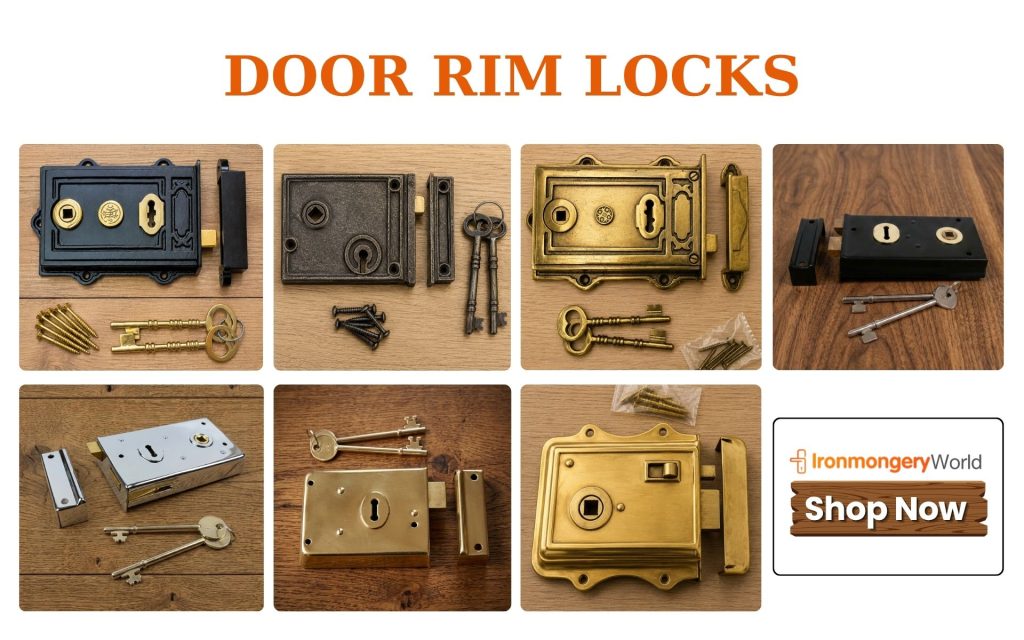
Older doors were frequently fitted with surface-mounted rim locks rather than mortice locks. If the original was a rim lock, reinstating one avoids cutting into a thin or historically significant door, which is worth considering in a listed building or conservation area.
Where a door has already been morticed, replacing like with like is usually simplest. Browse locks and latches by case size and backset, and measure the existing mortice before ordering rather than assuming.
Points worth checking:
- Backset (door edge to spindle centre) and case size
- Whether the door is thick enough for the lock case
- Whether the existing keep or strike plate can be reused
- Spindle length, especially with thicker Victorian doors or rim locks
Hinges: The Detail Most People Forget
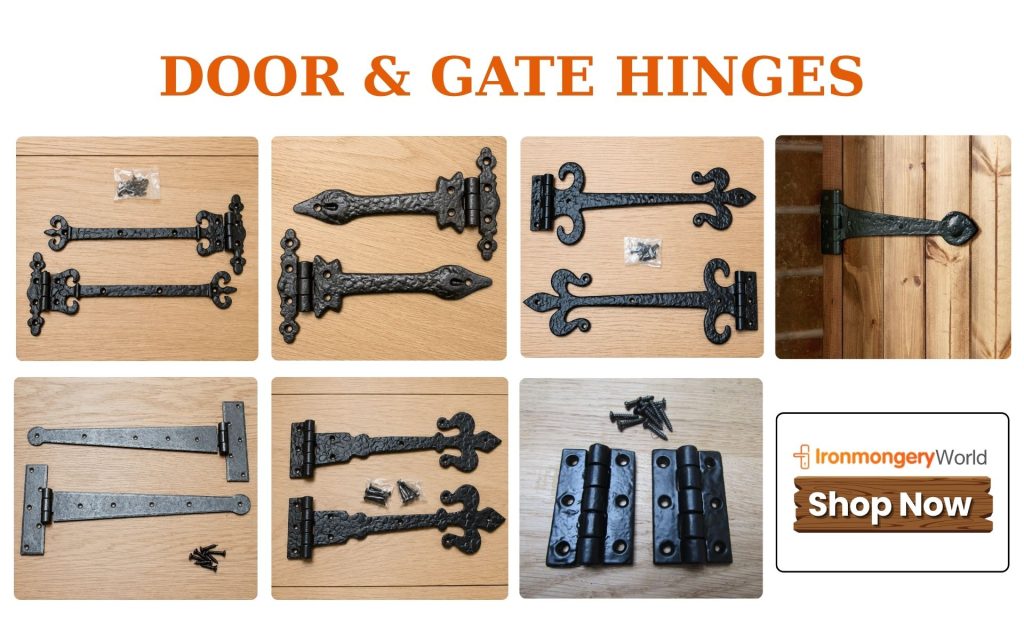
Old doors are heavy. Solid timber four- and six-panel doors weigh considerably more than modern hollow-core doors, and worn hinges are a common cause of sticking and dropping.
Traditional butt hinges in 76mm (3in) and 100mm (4in) sizes cover most internal doors, with larger and heavier-gauge options for front doors. Ball-bearing hinges are worth the extra cost on anything substantial. Cast iron butts, pressed steel and solid brass all have their place, and matching the door hinges to your handle finish pulls the whole door together.
Three hinges rather than two is sensible on tall or heavy doors, and essential on most fire doors.
Front Door Fittings
Exterior hardware sets the tone before anyone steps inside. A well-chosen door knocker and matching letter plate do more for a period façade than almost any other small change.
Measure the existing letter plate aperture before ordering, as sizes vary widely between manufacturers and older openings are rarely standard. Where a door needs to close reliably, particularly in flats and communal entrances, traditional-style door closers are available in finishes that suit older buildings.
Finishes and Materials
- Polished brass: bright and formal, needs regular polishing unless lacquered
- Aged or antique brass: softer, hides fingerprints, forgiving in busy homes
- Unlacquered brass: develops its own patina over time
- Black iron or antique bronze: suits cottages, farmhouses and utility areas
- Polished nickel and chrome: appropriate in Edwardian and 1930s bathrooms
- Porcelain and ceramic: authentically Victorian, usually with brass roses
Coastal properties are harder on metalwork, so check suitability before fitting brass or iron externally.
Common Mistakes
- Buying handles before checking the lock centres
- Fitting knobs to a short-backset latch
- Mixing three or four different finishes in one hallway
- Reusing tired hinges with new handles
- Ignoring fire door requirements on flats and HMOs
- Overtightening screws into soft, old timber
Bringing It Together
Start with the doors you have, work out which mechanisms are already fitted, then choose a single family of traditional door furniture in one finish and carry it through the house. Measure lock centres, backsets and hinge sizes before ordering, and keep spare screws of the right gauge for old timber.
If a door is listed, historically significant, or you are dealing with fire-rated requirements, a joiner or locksmith is worth the fee. For everything else, most period ironmongery is well within the reach of a confident DIYer with a sharp chisel and a bit of patience.
Read also: All-in-One Door Hardware Online Store in UK
Frequently Asked Questions
How do I know what lock centres my handles need?
Measure from the centre of the spindle hole to the centre of the keyhole or bathroom turn on your existing lock or backplate. On UK mortice sashlocks and bathroom locks this is commonly 57mm. Check the figure against the product specification before buying, as non-standard and imported locks do exist.
Can I fit period door knobs to any internal door?
Usually, but the latch matters more than the door. Knobs need a longer backset, typically 76mm, so your hand clears the frame when turning. If your door has a short-backset latch, replace the latch at the same time rather than persevering with grazed knuckles.
What is the difference between a rim lock and a mortice lock?
A rim lock mounts on the surface of the door and was standard in many Georgian and Victorian homes. A mortice lock sits inside a slot cut into the door edge. Rim locks avoid weakening thin or original doors, while mortice locks are less visible and more common in modern installations.
Which finish is easiest to maintain in a busy family home?
Aged or antique brass and black iron hide fingerprints and light wear far better than bright polished brass. Lacquered finishes need only an occasional wipe with a dry cloth. Avoid abrasive cleaners and household sprays on any finish, as they strip lacquer and dull patina quickly.
Do I need three hinges on an old door?
Solid timber period doors are heavy, so three hinges are advisable on anything tall, thick or in frequent use, and are generally required on fire doors. Two may suffice on lightweight internal doors, but a third hinge reduces sagging and keeps the door closing squarely for longer.